The Heat Is a Liar: Getting a Domestic Oven to Bake Proper Pizza
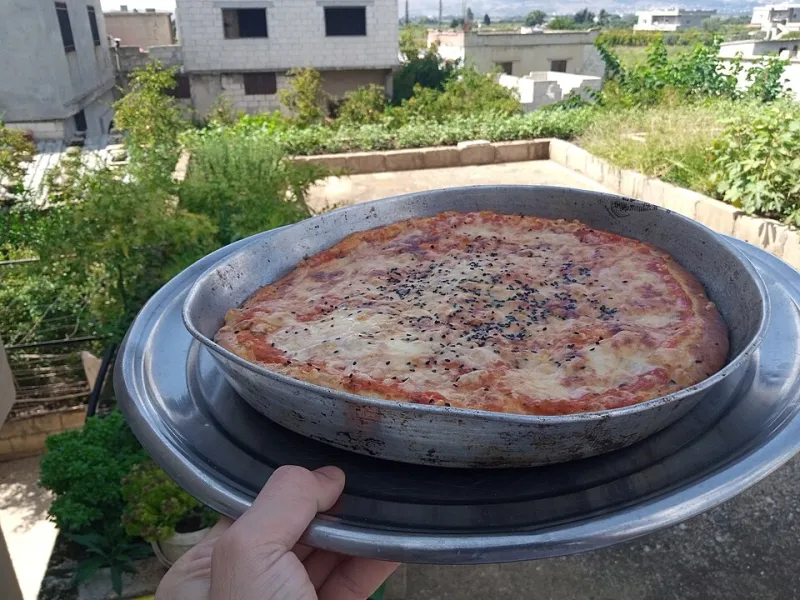
Photo: Hayan Alhasan, CC BY-SA 4.0, via Wikimedia Commons
Your oven is not a wood-fired oven, and that is fine
Most UK domestic ovens top out somewhere around 250°C to 275°C on a good day. A proper Neapolitan pizza wants something closer to 430°C to 485°C. That is not a small gap. It is the difference between a crust that puffs and leopards in 90 seconds and a crust that quietly dehydrates while the base stays pale. Accepting this is the first step. You are not trying to fake a wood-fired oven. You are trying to make the best pizza your kitchen can actually produce.
That means changing the brief. Instead of chasing a true 60-second bake, aim for a hybrid: a fast, hot bake with a preheated stone or steel, a blast from the grill, and a dough that can handle a little more time without turning to cracker. It is less romantic, but it works.
Thermostats are storytellers
Your oven dial says 250°C. Your oven thermostat says 250°C. Your stone, if you point an infrared thermometer at it after 20 minutes, probably says 210°C and is still climbing. Domestic ovens cycle on and off, and the air temperature is not the surface temperature. The stone is the thing that matters. It is also the thing that takes longest to heat.
Give it 45 to 60 minutes at full whack. Not 20. Not 30. If you are baking more than one pizza, give it another 10 minutes between bakes to recover. A cheap infrared thermometer is one of the best pizza purchases you can make. It tells you the truth about the stone, the base of the oven and the shelf you are about to slide onto.
Where to put the stone
Placement is a compromise. Too low and the base scorches before the top has any colour. Too high and the top blisters while the middle stays raw. In most UK fan ovens, the sweet spot is the upper-middle shelf: high enough that the grill can finish the job, low enough that the stone has a chance to cook the base.
If your grill sits at the top of the cavity, put the stone about 15cm to 20cm below it. Preheat the oven with the stone in place for the full 45 to 60 minutes. Do not put a cold stone into a hot oven. Do not take a hot stone out and put it on a cold worktop. Thermal shock is real, and so is the sound of a stone splitting in half.
A baking steel is more expensive than a stone but heats faster and transfers heat more aggressively. If you already have one, use it. If you are buying, a steel is the more forgiving option for domestic ovens.
The grill is your best friend, with a caveat
The grill is how you cheat the top heat. Once the pizza is in, the stone cooks the base and the grill colours the crust. The caveat is that grills are uneven. Some ovens only grill with the door closed. Some only with the door open. Some have a hotspot at the back that will carbonise one side of the pizza while the other side is still pale.
Stay at the oven. Rotate the pizza a quarter turn every 30 to 40 seconds if you can. If the grill is too fierce, drop the shelf or switch to a lower grill setting. If the base is done but the top is pale, lift the pizza closer to the grill for the final 30 seconds. You are not baking now. You are managing a small, delicious fire.
The 45-second window
Here is the bit that separates a good home bake from a burnt one. At some point after the pizza goes in, the crust goes from pale and soft to blistered and crisp. The window between 'that looks perfect' and 'that is definitely burnt' is short. In a hot domestic oven with the grill on, it can be as little as 45 seconds.
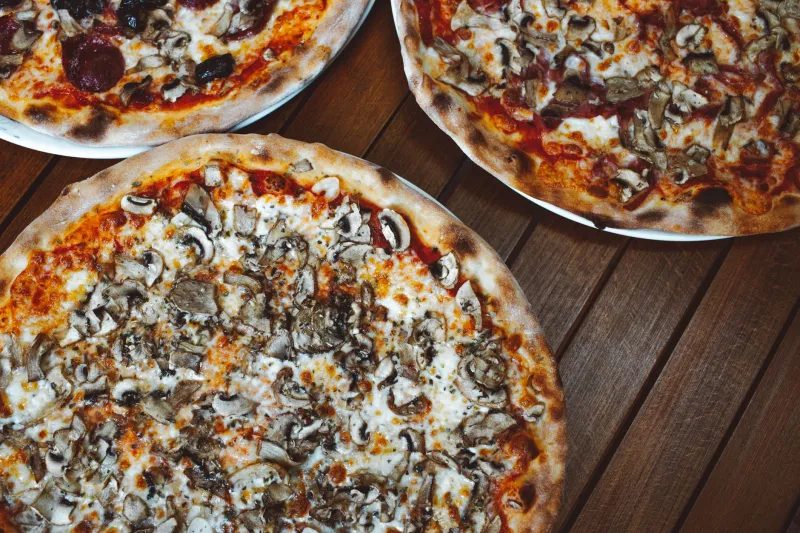
The signals are visual. The rim starts to puff and take on colour. Small dark spots appear. The base smells toasty rather than raw. The cheese is bubbling but not yet split. That is your moment. If you wait for the crust to look deeply browned all over, the base is probably already past it. If you wait for the cheese to brown, the rim may be carbon.
Have your peel, a plate and a cooling rack ready before the pizza goes in. Do not open the oven, decide the pizza needs another minute, then wander off. Open, turn, check, close. When it is ready, get it out. A pizza continues cooking on the stone and in its own heat. The 45-second window does not pause because you are looking for the scissors.
What to change next time
If the base burns before the top colours, move the stone down a shelf and preheat longer. If the top colours but the base is pale, move the stone up and use the grill earlier. If the middle is soggy, your dough is too wet or your stone is not hot enough. If the crust is tough, your dough may be under-fermented or too cold going in.
Keep the pies small. A 230g to 250g dough ball is easier to manage than a huge one, and it bakes faster. Keep the toppings light. Do not overload the centre. And remember that your oven is not a wood-fired oven. It is a domestic oven, and it can still make very good pizza if you stop believing its thermostat.