Stained Lid, Rubbish Bin: The Real Rules for Recycling Your Pizza Box

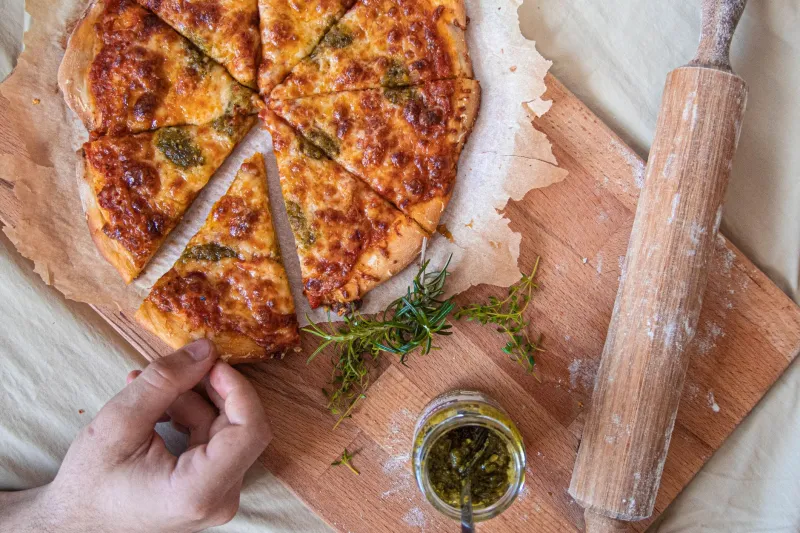
Photo by Photo by Nik on Unsplash on Unsplash
The last slice has gone. The box is open on the counter, lid dotted with oil, base holding a few sad crumbs and one stray bit of crust. You pick it up, hover between the recycling bin and the food caddy, and make the same guess thousands of UK households make every weekend. Does this thing get recycled, or does it get binned?
The honest answer is: it depends where you live. Not on the box, not on the label, not on what your mate told you in the pub. Your council decides. And in 2026, with England's simpler recycling rules now in force, the pizza box is still one of the most misunderstood bits of packaging in the kitchen.
The postcode lottery starts at the kerbside
There is no single UK rule for greasy cardboard. Cardboard itself is recyclable. Grease is not. Most councils accept clean cardboard at the kerbside, but a pizza box is rarely clean. Some councils say yes to pizza boxes as long as they are not soaked. Some say no to any food-contaminated cardboard. Others ask you to tear off the clean lid and bin the base. A few accept cardboard in the food waste caddy. Plenty do not.
That means two identical boxes on two neighbouring streets can end up in completely different places. One goes into a recycling lorry. One goes into general waste. One goes into food waste and gets processed with potato peelings. The box has not changed. The postcode has.
Since spring 2026, councils in England have been expected to collect a consistent set of core recyclables and offer weekly food waste collections to households. That is a genuine shift, and it should make life easier. But it does not force every council to accept contaminated cardboard. The grease problem is still settled locally, usually by the same contamination rules councils have had for years. So the first rule is boring and unavoidable: check your council's A to Z before you trust a bin icon on a takeaway box.
Why grease is the enemy, and not in a fun way
Recycling cardboard is not a dry process. The material is pulped in water, then screened and pressed into new paper products. Oil and food residue do not vanish in that bath. They contaminate the pulp, reduce the amount of usable fibre, and create extra waste that has to be filtered out. A little staining on a lid is often tolerated. A base that has absorbed half a pizza is not.
There is also the kitchen-bin reality. Greasy cardboard is damp, smelly, and attractive to pests. It can sit in a kerbside recycling box for a fortnight before collection. By then, a soaked base is not packaging any more. It is a science experiment.
This is why so many councils take the blunt approach: if it is contaminated, keep it out of recycling. They are not being difficult. They are trying to protect a system that only works when the material going in is reasonably clean.
The thirty-second tear test
You do not need a laboratory. You need a corner of the lid and a bit of honesty.
Tear a strip from the cleanest part of the box. If it tears crisply and the torn edge shows dry, fibrous cardboard, it is a good candidate for recycling. If it tears like damp tissue and the edge looks dark, shiny, or translucent with grease, it is contaminated. Give it a sniff, too. Fresh cardboard smells of nothing much. Old pizza box smells of garlic oil and regret, and that is a warning sign.
Then separate the box. A dry lid and dry side panels can often go in recycling even when the base cannot. The greasy base goes in the food waste caddy if your council accepts cardboard there. If it does not, it goes in general waste. Do not put a soaked base in the recycling bin and hope for the best. That is wishcycling, and it costs councils money.
The label problem: 'recyclable' and 'compostable' are not instructions
A box can say 'recyclable' and still be rejected at kerbside. That label usually means the material is technically recyclable, not that your council will take it covered in cheese and oil. It is a material fact, not a local collection promise.
'Compostable' is even trickier. Many compostable takeaway boxes need industrial composting conditions, not a home heap at the end of the garden. Some councils do not accept compostable packaging in food waste collections because it does not break down quickly enough in their system. If a box is labelled compostable, check the small print. If it is certified for home composting and your council accepts cardboard in food waste, you have options. If not, treat it like any other contaminated box and keep it out of the recycling stream.
And remove the obvious extras. Plastic windows, stickers, and leftover crusts are not part of the cardboard. Crusts go in food waste. Plastic windows go in general waste unless your council says otherwise. The box is not a single material, even when it looks like one.
What this means for takeaway night
The 2026 rules have made food waste collections more common in England, and that is good news for pizza boxes. A greasy base that would once have gone to landfill may now have a route into food waste processing, but only where the council accepts cardboard in the caddy. Do not assume. A weekly food waste collection does not automatically mean 'all contaminated cardboard welcome'.
The practical routine is simple. Open the box. Scrape the crusts into food waste. Tear off the dry lid. Run the tear test on the base. Recycle what is clean, caddy what is accepted, and bin what is not. It takes half a minute, and it stops a greasy box from dragging down a whole recycling load.
The box after the last slice
Pizza boxes are a small thing, but they are a useful test of how the UK's waste system actually works: locally, unevenly, and with a lot of good intentions on both sides. The box does not care where it goes. Your council does. Your tear test is the quickest way to stop guessing.
So next Friday, before you fold the lid shut, give it a look. Dry and crisp, recycle it. Damp and shiny, keep it out. And if you are still unsure, check the council website rather than the box. The label is marketing. The kerbside rules are the real menu.