The Plain Margherita Is the Only Review That Matters

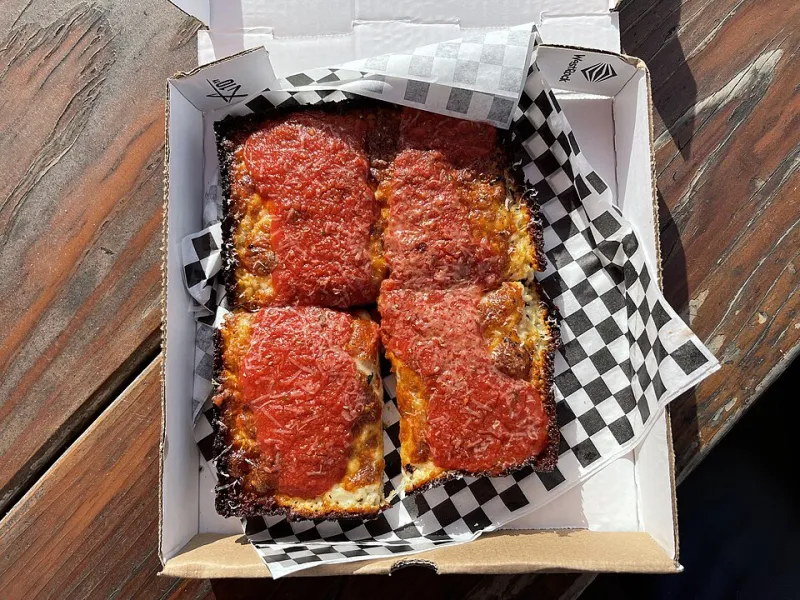
Photo: plain margherita pizza whole uncut on wooden peel, charred crust, overhead, via 64.media.tumblr.com
There is a specific kind of dread that comes with opening a pizza box and finding nine ingredients fighting for space. Artichoke. Nduja. Something pickled that shouldn't be. And underneath it all, a pale, flannelly disc of dough that nobody has ever been asked to notice.
That's the trick, isn't it. Toppings are a distraction technique. A plain margherita is not.
Strip a pizza back to flour, water, salt, yeast, tomato and cheese and there is nowhere left to hide. The base has to hold. The sauce has to taste of something other than tin. The cheese has to be properly melted rather than simply warm and sweating. Three or four cheap ingredients, no garnish, no confetti — and a verdict.
We've spent the past month doing something mildly obsessive: reading the online menus of a few dozen UK pizzerias, from Shawlands to Stokes Croft, and logging what they charge for their plainest pie. Not because the number is the whole story, but because it's the most honest one available to a customer sitting at home with a laptop.
What the prices actually say
The spread is wider than you'd guess. In our (entirely unscientific, deliberately nosy) sweep of menus, plain margheritas clustered somewhere between £7 and £12 in most provincial cities, with Glasgow and Newcastle leaning cheaper than Leeds and Bristol. London, as ever, is its own weather system: £9 at the reasonable end, comfortably north of £15 at the stiff end, occasionally with a "£1.50 for a drizzle of something" clause that should be prosecuted.
Now, price alone tells you very little. Rent is rent. A wood-fired oven in a railway arch costs more to run than a conveyor in a retail park. But price relative to the rest of the menu tells you plenty.
Here's the pattern we kept finding: the kitchens with the smallest gap between the margherita and their fanciest pie are, almost without exception, the ones worth your money. A £9 margherita sitting next to an £11.50 nduja-and-honey number suggests confidence. A £6.95 margherita under a £17.50 'signature' suggests the cheap one is a loss leader made by someone who has stopped caring, and the expensive one is where the effort goes — or, worse, where the marketing goes.
In other words: a kitchen's margin, and its honesty, live in the gap.
The five-point card
Take this to your next takeaway night. Score each out of five, no half marks, no mercy.
1. The underside. Lift the slice. Is there colour — actual browning, freckled spots, a bit of char here and there — or is it uniformly beige? Beige means the oven is under-powered or the bake is too short. You're looking for a base that's crisp enough to hold a horizontal slice for five seconds without folding.
2. The rim. It should be puffed, airy and slightly glossy inside, with a bit of chew. A rim that's dense all the way through is under-fermented dough; a rim that's bone-dry all the way through was probably made this morning and rushed.
3. The tomato. Plain passata, seasoned properly, cooked down a little, should taste sweet and sharp at once. It should not be watery enough to pool at the point of the slice, and it should not taste like nothing. If you can't identify the tomato as an ingredient, that's a point lost.
4. The cheese. Mozzarella should melt into a coherent, stretchy layer with some browning — not sit in discrete rubbery coins, and not weep a puddle of milky water into the middle. Cheap mozzarella in brine will do this; a blend with a bit of low-moisture in it usually won't.
5. Balance. One bite. Does anything shout? Too much salt, too much oregano, sauce applied so thick the middle collapses? Good pizza is boringly well-proportioned. That's the whole point.
Twenty-five is a very good pizza. Eighteen to twenty-two is a solid Tuesday. Under fifteen, and you should be asking what else that kitchen is cutting when you're not looking.
Why this matters more than star ratings
A margherita is also the cheapest thing you can order to test a new place. That's not a small thing in a year when nobody's feeling flush. Order the plain one first. If it's good, come back and order the silly one — and if it's not, you've spent eight quid finding out instead of eighteen.
It's the same logic that makes a good bakery worth trusting for its baguette, or a chippy for its chips. The unadorned thing is the tell.
A shorter version for the group chat
Look at the margherita price. Look at the top price on the menu. If the gap is small, order with confidence. If the gap is enormous, order the margherita and see what you get.
And if the box arrives and the pizza is pale, floppy and covered in things you didn't ask for — you already know what happened. The toppings were never the point. They were the cover story.
Scores, prices and prejudices are the writer's own. Tell us your local benchmark at Pizza 45 — we're building the map.