Expensive Crust: Putting Britain’s Luxury Pizza Boom Under the Lamp

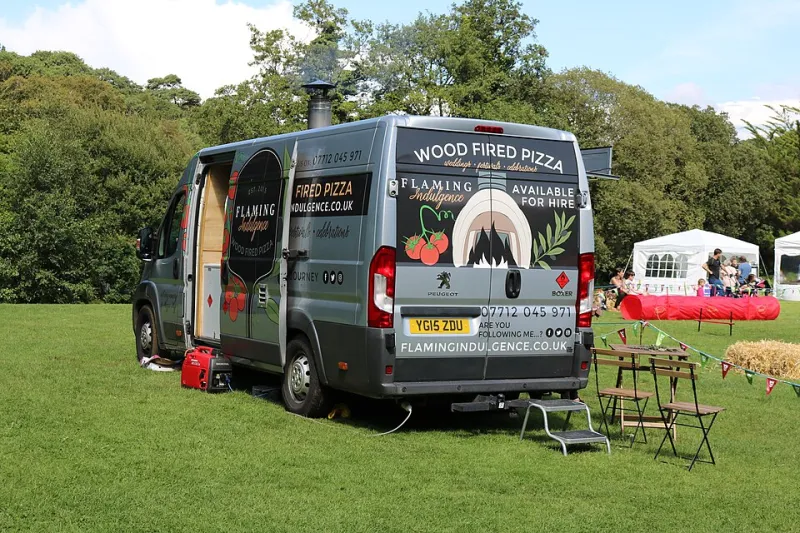
Photo: luxury pizza close-up wood fired crust restaurant UK, via thewowstyle.com
There was a time, not so long ago, when a pizza in Britain had a fairly predictable ceiling. You paid a bit more for a proper wood-fired crust, a bit more again for good mozzarella, and then you got on with your evening. In 2026, that ceiling has gone. A £45 pizza is no longer a curiosity from a single London tasting menu; it is part of a growing premium tier that stretches from the capital to regional speciality spots, and it arrives with the kind of language once reserved for wine lists: fermentation windows, single-origin flour, limited-run toppings, “chef-led” dough programmes.
Some of it is genuinely exciting. Some of it is a £45 lesson in how far a restaurant can stretch the word “artisanal.” The fair response is not to sneer at the price or to assume it must be justified. It is to ask what a luxury pizza is actually promising, and whether the plate delivers it.
First, What Are You Actually Buying?
A £45 pizza is rarely £45 worth of ingredients. That is not a scandal; it is restaurant economics. Flour, tomatoes, cheese and even decent cured meat do not add up to anything like that figure in raw cost. The money goes into labour, rent, energy, insurance, card fees, waste, service and the general cost of keeping a room open in Britain in 2026. It also goes into time: long cold ferments, careful balling, a hot oven that has been running for hours before the first order lands.
That means the premium-pizza pitch has to be about more than shopping. If the main selling point is a scattering of truffle or a slice of imported ham, the maths gets thin quickly. If the dough has been treated with real care, the cheese is good and the kitchen can consistently bake it properly, then the price starts to have a case. The customer is not buying a pile of ingredients. They are buying judgment, consistency and a room to eat it in.
The Ingredient Maths Don’t Add Up — and That’s Not the Whole Story
Let’s be blunt: a Margherita made with excellent flour, good tomatoes and proper mozzarella should not cost £45 on ingredient merit alone. Neither should a diavola with a decent chilli honey. The premium tier only makes sense when the whole experience is doing something a normal takeaway cannot. That might be a long-fermented base with real structure, a cheese that tastes of something, a crust that is blistered but not raw, and service that does not make you feel as if you have interrupted a private club.
Where luxury pizzas go wrong is when they use price as a substitute for craft. A heavy topping load can hide a badly proofed base. A “chef’s selection” can disguise a kitchen that is not confident enough to let a simple pie speak. Expensive ingredients are easy to list. A consistently great crust is harder to fake.
Where the Money Goes After the Oven
It is tempting to compare a £45 restaurant pizza with a £12 takeaway and conclude that someone is having a laugh. But the two are not the same product. One is a low-margin volume business built on delivery, cardboard and speed. The other is a sit-down experience with staff, rent, glassware, cleaning, reservations and probably a wine list that has to be maintained whether or not anyone orders from it.
That does not give every premium pizza a free pass. It does mean the fair comparison is with other restaurant meals, not with the box you order on a wet Tuesday. A £45 pizza has to compete with a £45 steak, a £45 tasting plate or a very good Sunday lunch. In that company, the crust needs to be memorable, not merely present.
The Eating Test: What a £45 Pie Must Nail
At this price, three things should be non-negotiable. First, the base: properly fermented, evenly baked, with a crust that has flavour and chew rather than a dusty edge. Second, balance: cheese, sauce and toppings should taste like they belong together, not like a shopping list arranged on dough. Third, consistency: if the pizza is worth £45 once, it should be worth it on a normal Thursday, not only when the founder is in the kitchen.
The real test is simple. Would you order it again, sober, on a Tuesday, if nobody was watching? If the answer is yes, the price has a chance. If the answer is “it was interesting,” that is not a ringing endorsement at this level.
The Regional Reality
The premium pizza wave is not just a London story. Regional cities have their own speciality spots, tasting menus and limited-run pies, and the £45 price tag turns up in Manchester, Bristol, Leeds and Glasgow too. But the context changes. In a city where the local benchmark for a very good pizza is lower, a £45 pie has to work harder to justify the jump. In London, rent does more of the explaining; elsewhere, the food has to do more of the talking.
That is not a reason to be unfair to regional operators. It is a reason to be specific. A £45 pizza in a neighbourhood restaurant with ten tables and a serious dough programme is one thing. A £45 pizza in a glossy room with a social-media queue and a menu written by a marketing team is another. The price is the same; the proposition is not.
Hype Has a Price, But It Shouldn’t Be the Main Ingredient
Britain’s pizza scene has become very good at creating occasions. Limited drops, collaborations, guest toppings and “you had to be there” specials all have a place. They can be fun. They can also be a way of charging luxury prices without doing the unglamorous work of getting the dough right every day.
The sceptical position is not that premium pizza is nonsense. It is that the customer should be able to taste where the money went. If the answer is “the brand,” “the queue” or “the truffle oil,” that is not enough. If the answer is “the crust,” “the fermentation” and “the fact that I would happily eat this again,” then the premium tier is doing its job.
So, Does It Earn Its Keep?
Sometimes, yes. A £45 pizza earns its price when the dough is genuinely excellent, the toppings are restrained and purposeful, the room and service make the meal feel complete, and the whole thing is better than the sum of its expensive parts. It does not earn its price when the cost is carried by hype, heavy toppings or a setting that flatters the food more than the kitchen does.
Britain’s pizza lovers should be open-minded about premium pies, but not deferential. Ask what the money is buying. Ask whether the base would still be good without the fancy toppings. Ask whether the experience is worth swapping a weeknight takeaway for. The £45 pizza is not automatically a rip-off, and it is not automatically a revelation. It is a promise. The crust should be the thing that keeps it.