Nobody's Forty-Five Minutes: What the Delivery Countdown Actually Measures

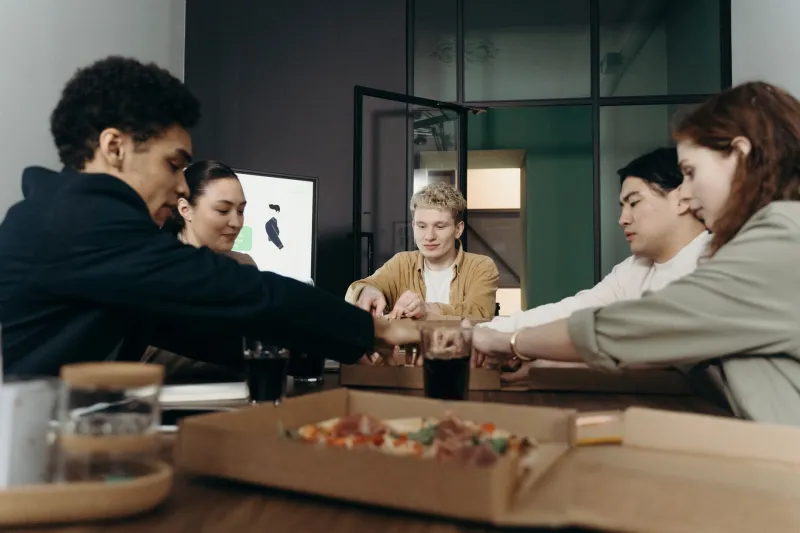
Photo by Photo by Kevin Musumbu on Unsplash on Unsplash
The countdown starts before you've finished tapping. Forty-five minutes, it says. Sometimes forty. Occasionally a triumphant thirty-two, which is the app's way of flirting with you. You put the phone face-down on the sofa arm, and for the next three quarters of an hour that number is the most emotionally significant figure in the house.
It is also, in most cases, a piece of fiction with a progress bar attached.
What the number is actually counting
An ETA on a UK delivery app is not a prediction of quality. It is a prediction of arrival, built from a handful of variables that the platform can see and a much longer list it cannot. Dispatch time. Shop backlog. Distance by road, not by crow. The number of other orders sharing your driver's bag. Whether the shop has a dedicated oven slot for delivery or is pulling pies off the same peel as the dine-in queue.
The trouble is that the countdown is presented to you as a single clean figure, so it reads like a promise. In reality it's an average — a statistical shrug dressed up as a deadline. Some shops pad it deliberately and then look heroic when they beat it. Others quote the shortest plausible number because they know a long ETA sends you browsing elsewhere. Neither figure is lying, exactly. Both are marketing.
The gap between dispatch and departure
Here's the bit most people never see. An order can be marked 'being prepared' the moment you pay, and stay there for twelve minutes while the shop works through the three orders ahead of yours. Then it's 'on its way' — but 'on its way' usually means a driver has been assigned, not that a driver is moving.
In busy urban patches, the gap between assignment and actual collection is where a good ETA goes to die. The rider is finishing another drop two streets over. The shop is still bagging. Somebody is looking for the garlic dip. Ten minutes evaporate, and the clock on your phone has quietly decided that this was always part of the plan.
If you want a rough rule: the more steps a platform shows you, the more steps there are to stall at. A single blunt time is often more honest than a four-stage tracker with a little scooter icon that hasn't moved in nine minutes.
Roundabouts, terraces and the last mile that won't behave
The final mile in a British town is not a straight line. It's a one-way system, a bus gate, a terrace with no numbers on the odd side, and a flat block where the buzzer has been broken since the spring. Delivery routing software is good at roads. It is less good at the particular folk logic of a Victorian street grid.
This is why two addresses a quarter of a mile apart can get wildly different arrival times, and why an ETA quoted at 6:40pm on a Friday is a fundamentally different document to the same ETA at 2pm on a Tuesday. Rush hour doesn't just slow the van. It slows the kitchen, because everyone in the country is ordering at once and the oven has a queue like a bar on a bank holiday.
The steam trap waiting on your step
The cruelest part of the whole arrangement is what happens after the ETA is met. A pizza that arrives on time has still spent fifteen, twenty, twenty-five minutes sealed in an insulated bag, and it has been quietly cooking itself in its own moisture the entire way. The base that went in crisp comes out soft in the middle. The cheese has set into a single rubbery sheet. The box lid is damp and sagging at the corners.
This is the steam trap, and no ETA in the world accounts for it. A pizza delivered in twenty minutes from four streets away can beat one delivered in eighteen from a shop three miles out, because the shorter journey means less time in the bag. Distance matters less than minutes-in-box. That's the number the app never shows you.
Signs the wait is worth it
- The shop is close, not the driver. A mile and a half is a promise. Four miles is a gamble.
- The tracker moves in a believable line. If the scooter icon travels along actual roads rather than teleporting, somebody is genuinely en route.
- You ordered early. The 6pm booking beats the 7:45pm impulse every single time.
- The bag looks stiff and dry. A driver with a proper rigid insulated bag, not a soft holdall, is a driver whose crust might survive.
- The order is simple. One or two pies travel far better than a party spread with sides fighting for space.
Signs to cut your losses
The tracker sits on 'preparing' past the quoted time with no update. The shop has a queue out of the door and a phone ringing off the hook. The ETA jumps by fifteen minutes twice in ten minutes, which means the platform is guessing. Or the rider is marked as 'arriving' for the third time while you're stood at the window like a character in a costume drama.
At that point, you're not waiting for a pizza. You're waiting for a bag of steam and regret with a side of garlic bread. Ring the shop, ask a human being a direct question, and if the answer is vague, cancel. A refund is a better dinner than a cold box.
The countdown is not a contract. It's an estimate with a marketing department. Treat it as a rough hint, watch the bag rather than the bar, and you'll eat far better for it — which, at Pizza 45, is the only verdict that matters.